yapping is keeping the channel open
the pros and cons of mythic dialogue

How much yapping is too much yapping? Or in other words, how many words are too many words? Today, I’m writing about dialogue, in movies, in life; in movies and in life, in an attempt to break the spell of misunderstanding, to demystify obscure aspects of behaviour, but also to find ways to make peace with all thoughts left unsaid and all of them that shouldn’t have been said.
The general advice for writing film dialogue, a forthright sermon propagated first and foremost by Robert McKee, is don’t do it. Stray from the obvious, the blatant text that is awkward and lacks clarity or can turn an exciting premise into one fully boring representation of it. Instead, strive for subtext, swing everyday talk into quotable lines and mythic ideas communicated with emotion that is able to transcend the dialectic itself. Or in what translates best to quotidian mimics, be brief, be cool.
We know this, we absolutely do. The opposite is often confused with exposition, a practice found in most storytelling formats and which when heavy can be tiresome, similar to a lengthy, draining conversation. The first note on any beginner’s script, it’s perhaps the most straightforward way to assess a screenwriter’s level of writing but no matter the talent that makes itself obvious later, every screenwriter must have indulged in word-vomiting turned expository dialogue. They must have to have found their voice.
So the story goes then, for those I’ll refer to as real-life people as opposed to fictional characters because they have to find their voice too, imperatively so, to ensure their survival.
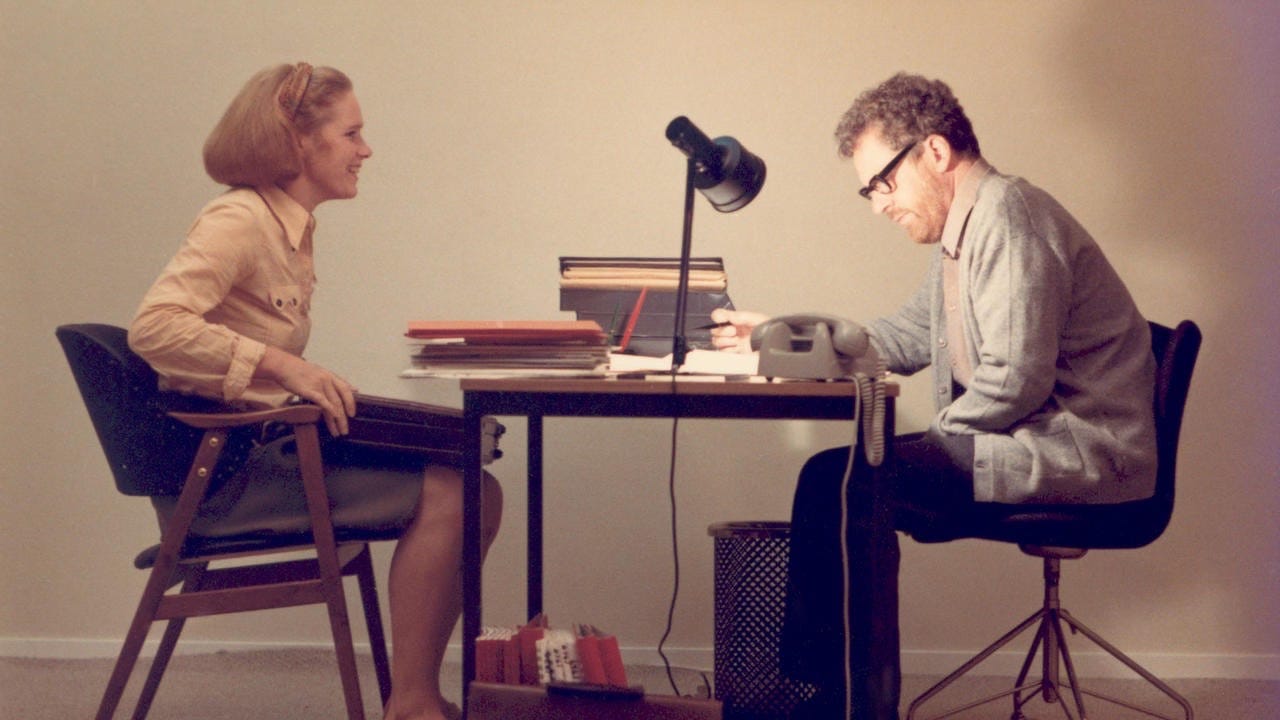
Dialogue is not conversation, preaches McKee but if one controversial movie, that may be a precursor yet is far from being the only one, Scenes from a Marriage (Ingmar Bergman, 1973), begs us to consider dialogue as a years-long conversation that flips theory on its head and shines a light on dialogue’s potential to amplify voice, bring out inner life, consolidate character and shape rhythm, then is it fair to ask: can cinematic, impactful dialogue be found in life, and if yes, are we prepared to hear it?
And yet that is not all, for the peak of this masterful psychological drama {Scenes from a Marriage} is the ability to follow laughter with feelings of grave devastation that make you want to turn it off, and run away into the safety you know exists in love. From The Criterion way; February picks
Perhaps the answer to the question above lies with the act of yapping or keeping the channel open. Perhaps we can divide people into two groups: the yappers and the non-yappers. The ones who hoard their words and the ones who spill them and if so, perhaps we can see where the prejudice lies when lean dialogue tries to insert itself in daily conversation and how that starkly contradicts the effortlessness with which natural chatter occurs. Perhaps my argument, then, becomes one in defense of sharing.
Dialogue is a skill that takes years of practice and those who find their way with words know this first-hand. At their personal worst, they’re emotional manipulators able to verbalise what should not be brought down into dialectics. At their professional best, they become acclaimed politicians, orators of the third kind. And at their extreme average, they wait stupefied for words that never come until a moment takes its form and mystique descends upon the lot.
Life is always action/ reaction, McKee proclaims and so all we can can hope for is dialogue that imitates those, in ways that won’t feel cheap, dramatic or overexposed.
I’ve expanded on the art of articulation in the past, finding Celine Song’s dialogue to be intentionally introspective and crediting her with taking a risk to honour film’s most frowned-upon tool as much in the one that flopped {Materialists} as in the one that astounded {Past Lives}, both lengthy and deliberate narratives framed as conversations about love. But the line is thin in between, for dialogue on screen is preceded by a contract invitation, a certain kind of poetic faith that puts critical thinking on a pedestal and waits.
All the screenwriting gurus will have you agree that dialogue is not more important than any other element of a script, yes. But flipping this statement on its head will have you hanging from someone’s lips as if the world would end if they were gone. From a Materialist way of talking
In life, rhythm is not achieved in an agreed-upon context. The divide between the yappers and the non-yappers can be strained to a harmful ego ride that seeks to impose one way as better than the other, much like we, the lovers of the cinema art, feel we must declare one movie as better than another when each one is offering something completely different.
Film is a visual medium but it’s also a versatile one and it’s surprising how eager real-life people, like myself, can be to reject the intimacy that comes with words in favor of the appearance of something that ends up saying nothing. In life and in the movies.